
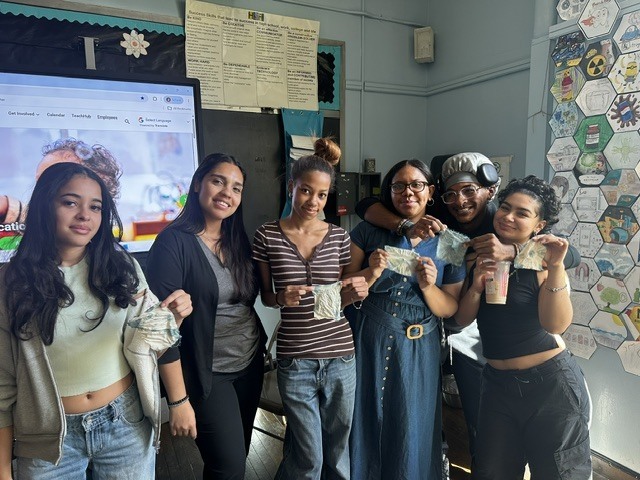
There is a moment in our Sustainable Fashion and Art class when the room goes completely quiet. It happens right as a dripping, yellowish-green piece of cotton is pulled from a murky, bubbling vat. For a split second, it looks like a mistake. But as the fabric meets the air, a chemical miracle occurs: it breathes in the oxygen, and right before our eyes, it transforms into a rich, deep, mesmerizing blue.
This is the magic of natural indigo dyeing.
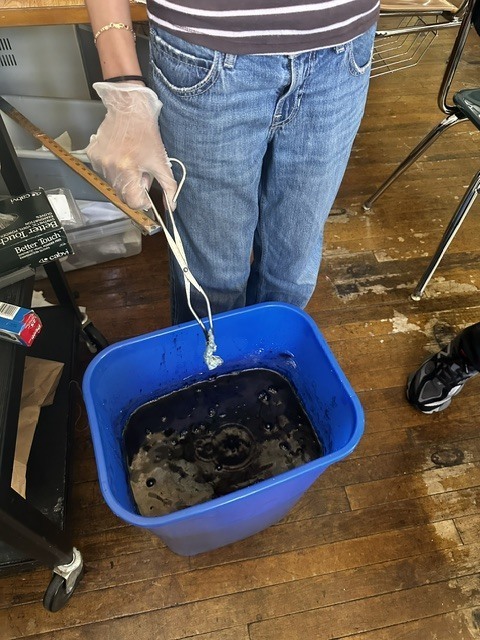
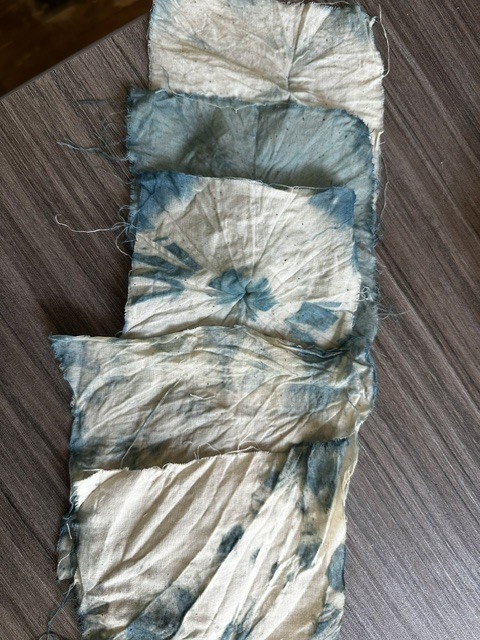
Recently, our class built our very own indigo vat from scratch, transforming raw fibers into beautiful, sustainably dyed textiles. But beyond the striking visual results, this project taught us a vital lesson about the future of fashion. By looking back at ancient techniques, we discovered a powerful, eco-friendly alternative to the modern textile industry's toxic status quo.
Here is what we learned about the incredible benefits of natural indigo dyeing, and why it stands in such stark contrast to "regular" commercial dyeing.
The vast majority of the blue jeans and clothing we buy today are dyed using synthetic indigo, which was formulated in a lab in the late 19th century. Synthetic indigo is derived from petrochemicals (fossil fuels) and processed using hazardous chemicals like formaldehyde and hydrogen cyanide.
In contrast, our class used natural indigo, which comes from the leaves of the Indigofera tinctoria plant. It is a biological process that relies on patience and temperature, completely free of fossil-fuel dependency.
The commercial textile industry is one of the largest polluters of fresh water in the world. Conventional "regular" dyes are highly water-intensive and rely on heavy metals and chemical fixatives (mordants) to force the color to stick to the fabric. When factories dump this untreated wastewater (known as "effluent") into local rivers, it blocks sunlight, suffocates aquatic life, and poisons drinking water.
Perhaps the greatest positive of this process was the shift in our mindset. In a world of "fast fashion," where clothes are treated as disposable, cheap commodities, creating an indigo vat forced us to slow down.