
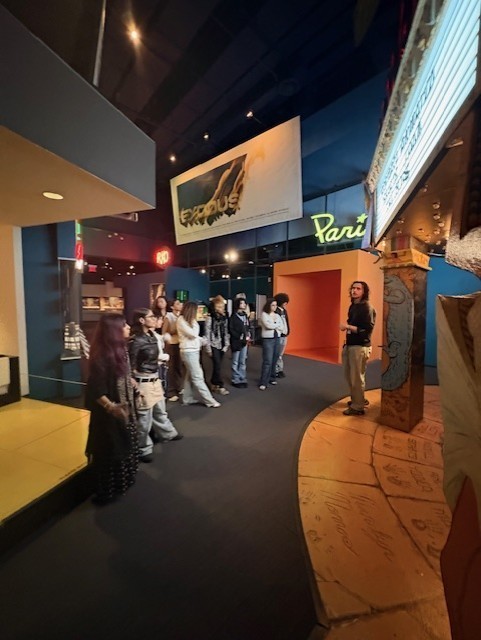
Students in Mx. Bohner and Mx. Dixon’s theater and film class recently stepped out of the classroom and into the world of cinema history with a trip to the Museum of the Moving Image—and it was nothing short of inspiring.
Located in the heart of Astoria, the museum offered students a hands-on journey through the evolution of film, television, and digital media. From the earliest motion picture devices to modern-day filmmaking technology, the experience brought concepts from class to life in a way no textbook ever could.
One of the highlights of the trip was exploring the origins of the moving image. Students had the chance to see early inventions that paved the way for cinema, including optical toys and pre-film animation devices that demonstrated how motion could be created from still images. These exhibits helped students better understand how storytelling through visuals has evolved over time.
The class also explored galleries dedicated to the art of filmmaking. They learned about everything from camera work and sound design to editing and special effects. Interactive exhibits allowed students to try their hand at dubbing voices, creating sound effects, and even editing short clips—giving them a deeper appreciation for the creativity and precision behind every film and show they watch.
Another memorable part of the visit was seeing iconic props, costumes, and behind-the-scenes footage from well-known films and television programs. These artifacts made the industry feel tangible and exciting, sparking curiosity and conversation among students about careers in the arts and media.
Mx. Bohner and Mx. Dixon designed the trip to connect directly with their curriculum, and students were able to make meaningful connections between what they’ve been learning in class and what they experienced at the museum. The visit not only reinforced key concepts but also encouraged students to think critically about how media is created and consumed.
Overall, the trip to the Museum of the Moving Image was an unforgettable experience. It deepened students’ understanding of film history, expanded their creative perspectives, and reminded everyone just how powerful storytelling through moving images can be.