
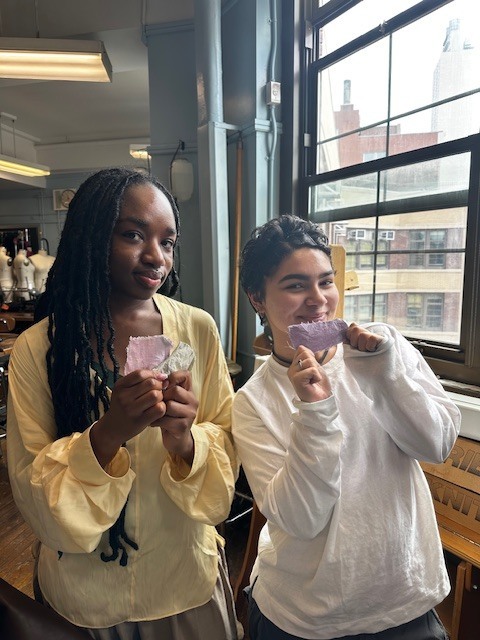
Senior Textile Science students kicked off their highly anticipated natural dyes unit this week with a fascinating exploration of organic pigments derived from black beans. The lab served as a deep dive into the chemistry of color, as students observed firsthand how natural modifiers can manipulate the pH levels of a dye bath; adding vinegar (an acid) or baking soda (a base) caused the fabric to shift through a stunning spectrum of blues, purples, and greens. To ensure the longevity and colorfastness of their hand-dyed cotton, students utilized alum as a mineral mordant to effectively bridge the gap between the fiber and the dye. This hands-on project successfully bridged the gap between traditional artisanal techniques and modern scientific inquiry, proving that high-level chemistry is found in the most everyday materials.
This unit holds significant relevance for students’ daily lives as consumers and future industry leaders. By understanding the chemistry behind natural versus synthetic dyes, students are better equipped to evaluate the environmental impact of the "fast fashion" industry and the toxic runoff often associated with commercial textile manufacturing. These skills empower them to make more sustainable choices in their own wardrobes and provide them with the technical foundation to innovate eco-friendly solutions in the global marketplace. From removing stains more effectively to appreciating the intricate science behind the colors we wear every day, our seniors are seeing the world through a much more colorful—and scientific—lens.