
At HSFI we offer 10 Advanced Placement College Level Courses!
In AP Biology, students have been exploring the interconnected topics of cellular structure, function, and energetics. Beginning with Unit 2, they examined how cell size, surface area–to–volume ratio, and membrane structure influence the efficiency of cellular processes. Students analyzed how water potential drives the movement of water across membranes and how these physical principles shape cell survival and function. As the class transitioned into cellular energetics, they applied this foundational knowledge to understand how cells capture, transform, and store energy through photosynthesis and cellular respiration.
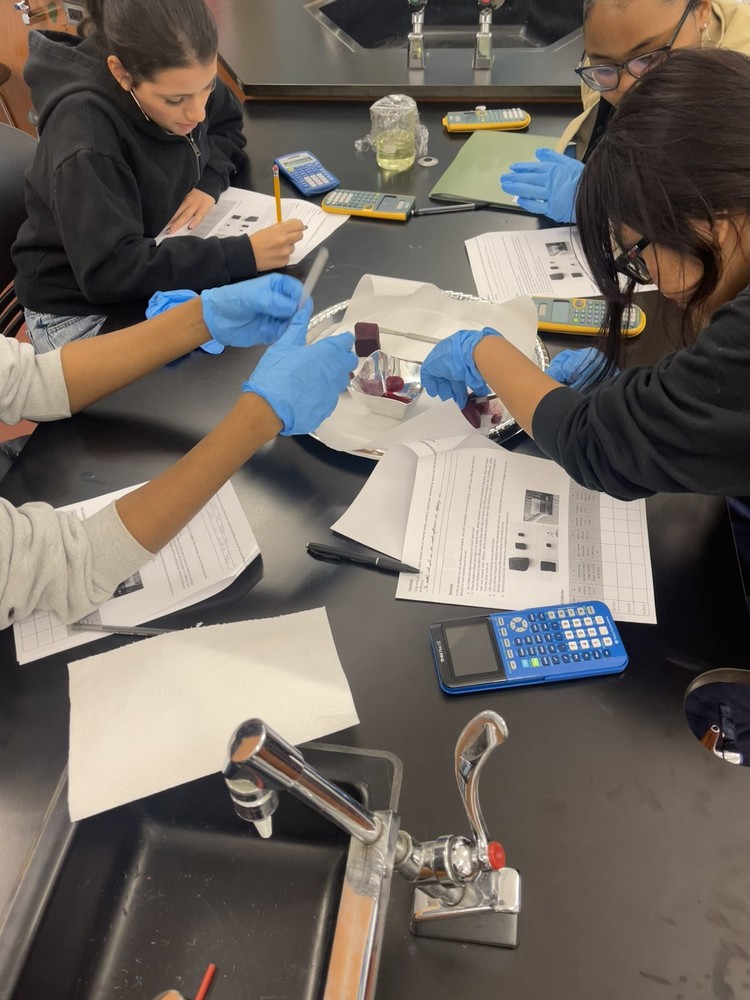
Throughout these units, students engaged in a range of hands-on lab experiences that brought abstract concepts to life. They conducted investigations on osmosis and water potential using Orbeez, allowing them to calculate solute concentrations and visualize how water moves in and out of cells. In their study of cell size limitations, students performed an experiment to calculate the diffusion rate of sodium hypochlorite into beets of varying sizes, allowing them to visualize the impact surface area to volume ratios has on the transport of materials in and out of cells. These labs provided opportunities to collect authentic data, refine scientific reasoning skills, and connect biological theory to real-world phenomena.
In addition to laboratory work, students strengthened their understanding through modeling and diagram analysis. They constructed visual models to represent membrane transport, surface area comparisons, and the flow of energy through metabolic pathways. Using detailed diagrams of chloroplasts, mitochondria, and the electron transport chain, students practiced annotating and interpreting complex processes step-by-step. These modeling exercises, coupled with AP-style diagram analysis, helped students visualize mechanisms, explain biological patterns, and communicate their reasoning clearly. Together, the combination of labs, models, and analytical tasks is building a strong, integrated understanding of how cells are structured and how they power life.